Written by Laura Micheli from LMJ
Making a silver ring by hand is one of those quietly magical processes: a simple strip of metal becomes a small sculpture for the body. At LMJ, every ring starts this way – slowly, thoughtfully, shaped in the studio with fire, hand tools and time. In this guide I’ll walk you through:
- The basic steps to make a silver ring at home
- How to create a hammered texture
- How to estimate how many grams of silver you’ll need
- How to make your silver rings shiny again
Whether you’re planning to try this at home or dreaming of one day joining our Jewelry Making Workshop at the LMJ Creative Lab in Zurich, think of this as an introduction to the craft behind the pieces you wear.
How to make a silver ring at home?
Materials
- Sterling silver strip or wire (e.g. 0.8–1.2 mm thick, 2–4 mm wide)
- Silver solder (hard or medium)
- Flux for soldering
- Pickle solution (for cleaning after soldering)
- Sandpaper (various grits)
- Optional: polishing compounds
Tools
- Jeweller’s saw frame and blades
- Steel ruler and fine marker or scribe
- Flat and half-round files Ring mandrel (ring stick)
- Rawhide or nylon mallet
- Soldering block & small torch
- Tweezers and soldering pick
- Safety gear: eye protection and good ventilation
Before you start: working with fire and metal always requires care. If you’re completely new to this, I strongly recommend learning in a proper studio or workshop first, where tools and safety measures are already in place.
Step 1 - Decide on size and design
Choose your ring size using a ring sizer or a ring that fits well. Decide on width and thickness: a minimal band is often 2–3 mm wide; more sculptural pieces can be wider and thicker. LMJ rings often explore organic, slightly irregular silhouettes – don’t feel forced into perfect symmetry.
Step 2 – Measure and cut the silver
A simple way to estimate the strip length for a band: Use a ruler to measure the inner diameter of the ring in millimetres, then calculate the circumference by multiplying the diameter by π (3.14159). Add about 1–1.5 mm to this measurement to compensate for the material thickness and finishing. Mark this length on your silver strip and saw carefully along the mark and file the ends flat so they meet cleanly. Use a file to gently refine the shape – cutting with the saw is rarely perfectly precise.
Step 3 – Form the ring
Gently bend the strip into a circular shape using pliers or your fingers. Place it on the ring mandrel and use the rawhide mallet to close the ends so they meet snugly with no visible gap – this is very important for a clean solder.
Step 4 – Solder the joint
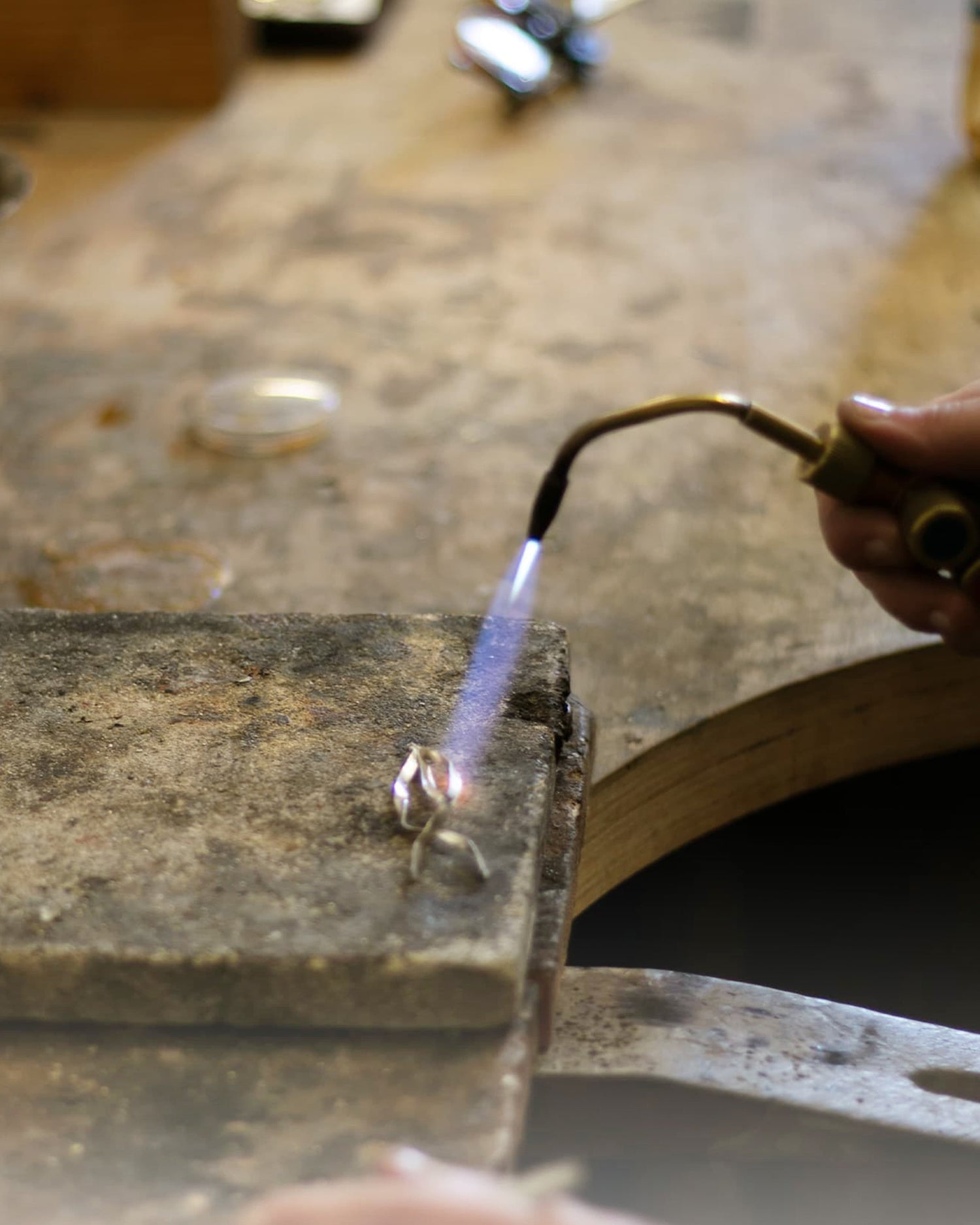
Apply flux to the joint and place a small piece of solder on the seam. Heat the ring evenly with the torch until the solder flows and fills the gap. Let it cool briefly, then place it in pickle to remove oxides.
Step 5 – Shape and refine
Return the ring to the mandrel and hammer gently to true up the circle. Check the size and adjust by hammering further down the mandrel if needed. Use files to refine edges and the outer profile, especially if you want a sculptural, organic outline rather than a perfect factory-smooth ring.
Step 6 – Sand and pre-polish
Use sandpaper in steps (e.g. 400 → 800 → 1200 grit) to remove scratches. Work in one direction, then rotate 90° with the next grit to see where old scratches remain. At this stage you can decide: keep a matte surface, or move toward a high shine.
How to make a hammered silver ring?
A hammered texture catches the light beautifully and helps to disguise small scratches – which makes it perfect for a first ring. There are two main ways to apply this texture: on the flat strip, before you bend it into a ring, or on the finished ring, once it’s already round and soldered. If you choose the second option, keep in mind that the ring will enlarge slightly during hammering. When you calculate the length of your silver strip, it’s a good idea to work with one ring size smaller than your actual size to compensate. Below, I’ll walk you through how to apply the hammered texture while the strip is still flat, before forming the ring.
Step 1 – Choose your hammer
A ball-peen hammer or texturing hammer gives a beautiful, organic pattern. Make sure the hammer face is clean and smooth; any scratch on the hammer will transfer onto the metal.
Step 2 – Hammer on a steel flat surface
Place the silver strip on a steel block or other solid metal surface. This supports the metal and helps you get crisp, clean impressions. Starting at one point, hammer light, controlled blows on the metal. Work in several passes rather than trying to get the final look in one round – this keeps the pattern measured and intentional.
Step 3 – Refine the texture and finish
Once you’re happy with the texture, lightly sand the edges to keep them comfortable on the finger. You can either: Keep a soft satin finish (stop at a finer sandpaper), or give it a shiny hammered look by polishing with compounds or a polishing cloth, letting the hammered facets reflect the light. At LMJ, these hammered and textured surfaces are a way to celebrate “creative imperfections” – each mark becomes part of the ring’s story, rather than something to hide.
How much grams of silver do you need to make a ring
The exact amount of silver depends on the ring size (inner circumference), width of the band, thickness of the metal and design (simple band vs chunky or sculptural form). For a simple sterling silver band, here are rough ranges:
- Fine, minimal band (1.5–2 mm wide, 1.2–1.5 mm thick) → often around 1–2 g of silver
- Classic medium band (2.5–3 mm wide, 1.5 mm thick) → often around 2–3 g
- Chunkier or wide band (4–6 mm wide, 1.5–2 mm thick) → often 4–7 g or more, especially in larger ring sizes.
Two tips: Always buy a bit more than the calculated minimum. You’ll lose a little through sawing, filing and refining the shape. If you’re experimenting, start with a relatively narrow, medium-thickness strip – it’s easier to work and more forgiving for a first ring. At LMJ, we often work with recycled silver and gold, melting and reshaping metal over and over. If you’re planning to make more than one ring, think long-term and purchase enough silver to experiment freely.
How to make silver rings shiny again?
If your silver ring has lost its shine, you’re not alone. Silver naturally oxidises and picks up micro-scratches with time. The good news: a little care can bring it back to life.
Everyday cleaning at home
For solid silver rings without delicate stones: Prepare a bowl of warm water with a drop of mild dish soap. Soak the ring for a few minutes. Gently scrub with a very soft toothbrush, especially inside and under any details. Rinse thoroughly and dry with a soft, lint-free cloth. This removes everyday oils and dirt and already restores some brightness.
Silver polishing cloth
A high-quality silver polishing cloth is one of the simplest tools to revive the shine. Rub the ring gently, following its shape rather than back-and-forth in straight lines. Focus on raised areas and edges where light naturally hits. Avoid aggressive silver dips unless you know exactly what alloys and stones you’re working with – they can be too harsh and may damage certain finishes or gemstones.
Toothpaste
Use a plain, white toothpaste (no whitening agents, no microbeads, no strong abrasives). Apply a tiny amount to a soft cloth or very soft toothbrush. Gently rub the silver, following the shape of the ring. Rinse very well with warm water and dry with a soft cloth. Toothpaste is mildly abrasive, so avoid it on gold-plated pieces, soft finishes, or stones – it can scratch or dull the surface over time.
Baking Soda & Aluminium Foil (for tarnish on silver)
Line a small bowl with aluminium foil, shiny side up. Place the silver ring in the bowl so it touches the foil. Add a spoon of baking soda and pour hot (not boiling) water into the bowl. A light sulphur smell is normal; it’s the tarnish being removed. Let it sit for a short time, then remove, rinse thoroughly, and dry with a soft cloth. This works well on plain silver but is not recommended for pieces with gemstones, delicate patinas, or plating, as it can alter certain finishes.
Professional polishing and replating
Over time, deeper scratches and dullness may need a professional touch. In the LMJ studio, we: Clean the piece thoroughly Re-polish surfaces on the polishing motor Re-plate when needed for gold-plated pieces We also offer complimentary polishing and fairly priced replating for LMJ jewelry to make sure your pieces age beautifully and last a lifetime.
Next Steps
Making a silver ring is a small act of architecture for the body: you measure, cut, bend and sculpt a simple strip of metal into something deeply personal. Whether you decide to try a DIY silver band at home, or prefer to craft your first ring in a guided setting, understanding the steps behind the process changes how you see the jewelry you wear.
If you’d like to experience this in person, you can always join one of the LMJ Creative Lab workshops in Zurich – where we explore these techniques slowly, together, and you leave with a ring that truly tells your story.
Discover more here: Jewelry-Making for Beginners.
About Laura Micheli
Laura Micheli is a Zurich-based jeweler and founder of LMJ. Her work combines bespoke craftsmanship with a thoughtful approach to redesign, creating contemporary pieces that carry forward both the material and the meaning of the original jewelry.