Written by Laura Micheli
I would have never thought that one day I’d design the jewelry I wore to my own wedding. And then it happened. I got married in 2025 - the same year I really fell into the world of wedding jewelry. What I learned is simple: choosing wedding jewelry is less about following rules and more about finding the right balance between the dress, the silhouette, and the pieces you will still love afterwards.
The best wedding jewelry does not compete with the dress. It brings structure, light, and personality to the overall look, while still feeling like you. In most cases, that means choosing one main point of focus - earrings, necklace, or both in a very restrained way - and letting the rest stay quiet.
This guide brings together the bridal questions I hear most often: what jewelry to wear with a wedding dress, whether pearls still feel timeless, whether you can mix metals, how to think about jewelry for the ceremony and the party, and how to choose pieces you will genuinely wear again after the wedding day.
How to choose wedding jewelry without overdoing it
When brides start looking at wedding jewelry, the temptation is often to build a full set. But in reality, the most elegant bridal looks are usually the most considered ones. A pair of earrings, a fine necklace, or a ring with presence can be enough. The goal is not to show every piece at once. It is to create a feeling of harmony.
A useful starting point is to ask what the dress is already doing. If the gown has lace, texture, embroidery, or a lot of visual detail, the jewelry should usually step back. If the dress is simpler and cleaner, there is more room for sculptural pieces or a stronger silhouette in the jewelry.
The second question is longevity. Wedding jewelry should still make sense after the ceremony. The pieces that work best are usually the ones that feel timeless enough to wear later with a simple shirt, a black dress, or on another important occasion. That is often what makes them feel right in the first place.
What jewelry to wear with a wedding dress
The best wedding jewelry always depends on the neckline, fabric, and overall styling of the dress.
With a strapless or open neckline, there is usually space for either a delicate necklace or a stronger earring. Both can work, but rarely at full volume together. If the earrings have movement or sculptural weight, it is often better to leave the neck bare. If the necklace is the main point of focus, the earrings should stay smaller and quieter.
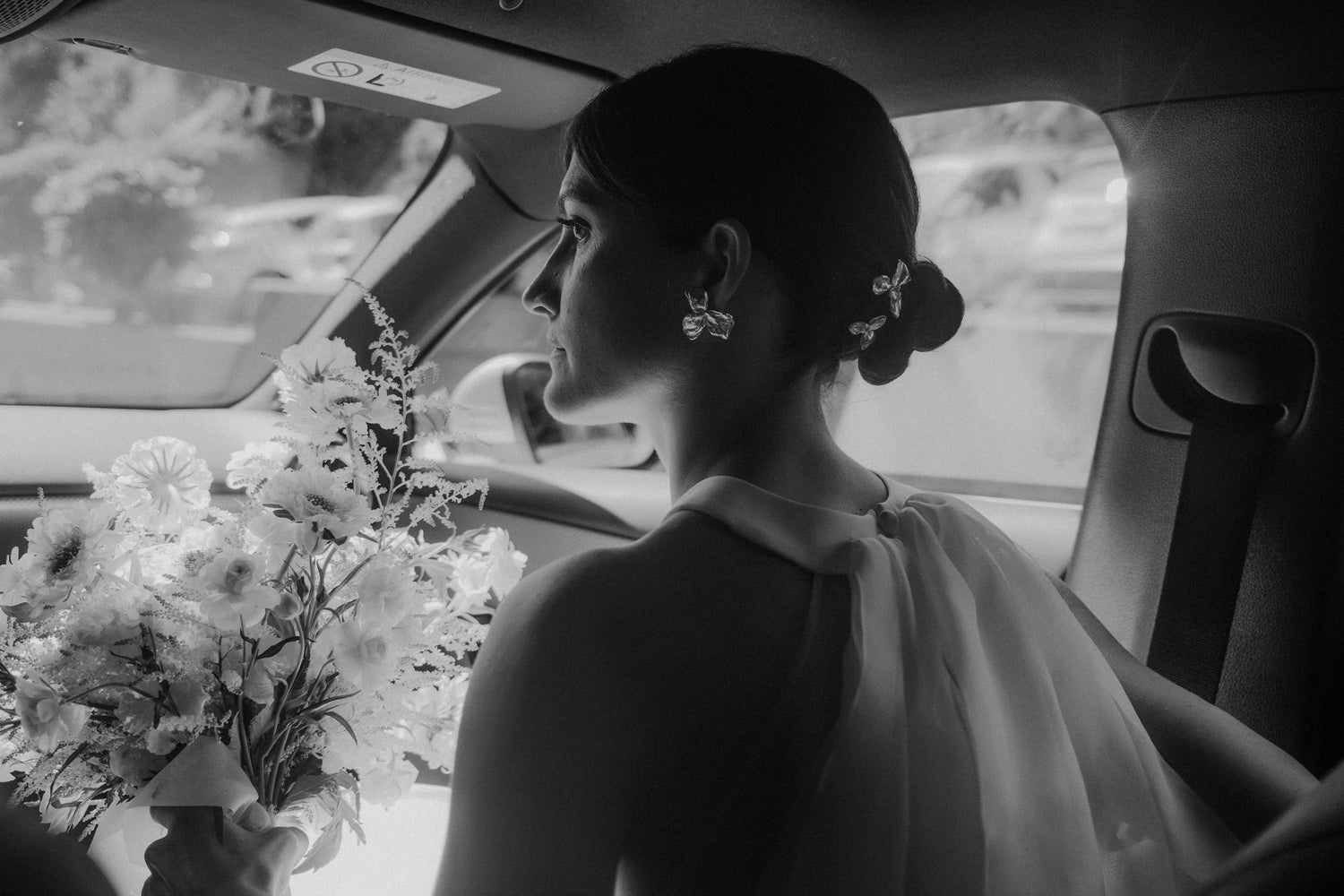
With a high neck, halter, or more closed neckline, earrings usually do more of the work. A necklace can feel unnecessary or crowded, whereas a refined earring helps frame the face and keeps the look balanced. The same is often true when the bodice already has a lot of embellishment.
Simple dresses allow more freedom. This is where textured gold, sculptural earrings, or a more distinctive necklace can feel especially beautiful, because the dress leaves room for the jewelry to speak. On a more embellished dress, the role of the jewelry is usually to support rather than to lead.
If you are wearing a veil, it also helps to think about movement and proportion. A veil already adds softness and volume around the head and shoulders, so jewelry often looks best when it stays refined and intentional rather than overly elaborate. The same goes for hairstyles: when the hair is up, earrings become more visible; when the hair is down, the pieces need enough shape or shine to still be felt.
Do brides need a necklace?
Not necessarily. One of the most common bridal questions is whether a wedding look is incomplete without a necklace. Usually, the answer is no.
A necklace makes sense when the neckline leaves space for it and when the piece adds something deliberate to the composition. But many bridal looks are stronger without one. Earrings alone can often create a cleaner and more modern effect, especially with high necklines, lace-heavy dresses, halter styles, or statement veils.
If you are unsure, it is usually better to remove one thing rather than add one thing. Bridal styling tends to improve when there is a clear visual hierarchy.
Pearl wedding jewelry: timeless, but not only traditional
Pearls remain one of the most beautiful choices for wedding jewelry, but they do not have to feel overly classic or conventional. What makes pearls interesting now is the way they can shift between softness and modernity depending on the design.
A small pearl earring or a delicate pearl necklace can bring light and calm to a bridal look. Baroque or more irregular pearls can feel slightly less formal and more contemporary, especially when paired with clean silhouettes or sculptural gold. This is often where pearl wedding jewelry feels strongest - not when it tries to recreate a traditional bridal formula, but when it adds a softer note to a more personal look.
Pearls are also a good example of jewelry that often lives on well after the wedding. They can be worn again easily, which makes them feel less like costume for one day and more like part of a lasting wardrobe.
Can you mix gold jewelry with a silver wedding ring?
Yes - absolutely. Mixing metals can look very elegant when it feels intentional.
A silver or platinum-toned ring with warm gold earrings or a fine gold necklace can create a bridal look that feels layered and personal rather than too matched. The key is not to make everything fight for attention. If you mix metals, let the shapes stay coherent and the proportions stay calm.
In practice, mixed metals often work best when one metal leads and the other supports. That could mean a silver-toned wedding ring paired with small gold earrings, or gold jewelry worn alongside an engagement or wedding ring in a cooler tone. The result can feel modern, subtle, and much less rigid than a fully matched set.
Wedding jewelry sets for brides and bridesmaids
Coordinated wedding jewelry can be beautiful, but it does not need to mean identical sets. In fact, it usually looks better when the pieces share a common mood rather than an exact formula.
For the bride, that might mean earrings and a necklace in the same metal family, or pieces that echo each other in texture or shape without being overtly matching. For bridesmaids or the wider wedding party, the same principle applies. A shared material - gold, silver, or pearls - or a repeated silhouette is often enough to create cohesion.
This gives the overall look unity without making anyone feel over-styled. It also tends to photograph better, because the effect is consistent but not too rigid.
What jewelry to wear for the ceremony and what to change for the party
Many brides want one look for the ceremony and a slightly freer one for the evening. This can work beautifully without needing a completely separate set of jewelry.
Often the cleanest approach is to keep the ceremony look more restrained, then shift one element later. That might mean changing into a larger earring, adding a necklace once the neckline opens up, or removing a more formal piece and keeping only the one that feels strongest.
The advantage of this approach is that it creates variation without losing coherence. It also often helps you identify which pieces you are most likely to keep wearing after the wedding, because the evening look tends to reveal what feels most natural on you.
How to choose bridal jewelry you will still wear after the wedding
This is the question I find most useful, because it usually leads to the best decisions.
If a piece only works on the wedding day, it may still be right - but often the most meaningful bridal jewelry is the jewelry that carries on afterwards. That might be a pair of earrings you wear for anniversaries, a necklace that becomes part of your everyday wardrobe, or a ring that always brings the day back without feeling too ceremonial to wear again.
The pieces that last are usually the ones that feel close to your own style already. They may be slightly elevated for the occasion, but they still sound like your usual aesthetic. That is often what makes them feel timeless.
At LMJ, this is also how I think about wedding jewelry: not as something separate from life, but as something that marks a moment and then stays with you long after it.
If you are currently choosing yours, you can explore the LMJ Wedding Collection, or pair ceremony pieces with pieces from the earrings and necklaces collections. If you are also choosing a ring, you can view the engagement rings and get in touch for more personal guidance.
Frequently asked questions
What jewelry should a bride wear?
A bride should usually wear jewelry that complements the dress rather than competing with it. In most cases, one clear focal point - earrings, necklace, or a ring - creates the most elegant result.
Should a bride wear a necklace with a strapless dress?
Sometimes, yes. A strapless dress can work beautifully with a delicate necklace, but it can also look stronger with statement earrings and no necklace at all. It depends on the balance of the overall look.
What jewelry works best with a high-neck wedding dress?
High necklines usually look best with earrings rather than a necklace. The neckline is already visually present, so the jewelry should often stay around the face rather than the neck.
Are pearls good for wedding jewelry?
Yes. Pearls are timeless, soft, and easy to wear again after the wedding. The key is choosing a design that feels personal and not too costume-like.
Can you mix gold jewelry with a silver wedding ring?
Yes. Mixed metals can feel very modern and elegant as long as the styling stays balanced and intentional.
What jewelry should you wear for the wedding party or reception?
The evening often allows a little more freedom. Many brides keep the base look the same and change one element, such as the earrings or necklace, to create a lighter and more expressive second look.